
ChatGPT is Rewriting SEO: Your Ultimate Guide to Answer Engine Optimization
ChatGPT is an AI-powered conversational tool developed by OpenAI that provides direct answers to user questions through natural language processing. Unlike traditional search engines that display ranked lists of websites, ChatGPT generates comprehensive responses by synthesizing information from its training data, fundamentally changing how people find information online.
This shift represents the biggest disruption to SEO in two decades. When users get instant answers from AI instead of clicking through to websites, traditional search rankings lose their power. Your content needs to become the source these AI engines cite, or risk becoming invisible.
At AgenticPress, we’ve spent years serving clients through major search algorithm updates, but this transformation requires an entirely new playbook. Answer Engine Optimization (AEO) isn’t about ranking #1 anymore; it’s about becoming the authoritative source that AI tools reference when answering questions in your industry.
ChatGPT and the Death of the Blue Link
For twenty years, SEO meant one thing: getting your link to the top of Google’s results page. Users typed queries, scanned a list of blue links, and clicked through to websites. The game was simple: rank higher, get more clicks, win more business.
That world is disappearing.
Today, when someone asks “What’s the average home price in Austin?” or “How do I stage a home for sale?”, they’re increasingly turning to ChatGPT, Google Gemini, Perplexity AI, and similar AI tools that deliver direct, conversational answers. No scrolling. No comparing ten different websites. Just an immediate response that synthesizes information and presents it clearly.
Even Google recognizes this shift. Google AI Overviews now appear at the top of many search results, providing AI-generated summaries that answer questions without requiring users to click anywhere. The search result page itself has become the destination. Microsoft Bing has integrated AI chat directly into its search experience, further accelerating this zero-click trend.
Key Stat: According to a SparkToro analysis from March 2024, fewer than 50% of Google searches now result in a click to a website, a phenomenon known as zero-click searches. Users find what they need directly on the results page or through AI-generated answers.
This transformation changes everything about visibility online:
- Old way: Optimize to rank #1 → User clicks your link → User reads your content
- New way: Create authoritative content → AI cites your expertise → User gets answer (without visiting your site)
The brutal truth? Your perfectly optimized blog post ranking #3 on Google means nothing if ChatGPT is answering the question first, citing a completely different source. Or if Google’s AI Overview pulls from a competitor’s content instead of yours.
ChatGPT isn’t just another tool in the search ecosystem; it’s fundamentally redefining what “being found online” means. Users don’t want to search anymore; they want answers. They don’t want options; they want solutions. And they’re increasingly comfortable getting both from AI.
This isn’t about gaming a new algorithm. It’s about understanding that the finish line has moved. Success no longer means driving traffic to your website; it means becoming the trusted source that AI engines reference when they answer questions in your field.
What is Answer Engine Optimization (AEO)? Your Playbook for the ChatGPT Era
Answer Engine Optimization (AEO) is the practice of optimizing your content to be discovered, cited, and referenced by AI-powered answer engines like ChatGPT, Claude, Perplexity, Google Gemini, and Google’s AI Overviews. Instead of optimizing for search rankings alone, AEO focuses on becoming the authoritative source that AI models quote when answering user questions.
Think of it this way: SEO is like ensuring your book appears in the library’s catalog when someone searches for a topic. AEO is like being the specific paragraph the librarian quotes when someone asks them a direct question. The goal shifts from “be findable” to “be quotable.”
This distinction matters because AI answer engines fundamentally change how information flows to users. Traditional SEO aims to attract clicks through high rankings. AEO recognizes that the click might never happen, the AI delivers the answer directly, either citing your brand or not mentioning you at all.
Understanding how AEO and SEO work together is crucial for modern digital strategy. These approaches complement each other rather than compete, creating a comprehensive visibility framework that works across both traditional search and emerging AI platforms.
The Core Goals of AEO
Answer Engine Optimization pursues three fundamental objectives:
- Visibility in AI-generated answers: Ensuring your content appears when ChatGPT, Google Gemini, and other AI tools respond to questions in your domain
- Brand mentions and citations: Getting your business, expertise, or content explicitly referenced as the source of information
- Authority establishment: Positioning yourself as the definitive expert that AI models consistently turn to for accurate, trustworthy answers
The strategic difference is profound. With traditional SEO, you could rank well by optimizing title tags, building backlinks, and targeting keywords. With AEO, you need to structure information in ways AI systems can consume and process, with clear answers, authoritative sources, factual accuracy, and contextual depth.
ChatGPT and other Large Language Models (LLMs) don’t care about your meta descriptions or keyword density. These Generative AI systems evaluate whether your content provides clear, well-supported answers that they can confidently cite. That requires a completely different content strategy, one built on demonstrable expertise, structured clarity, and verified facts rather than optimization tricks.
The playing field has changed. AEO is your new playbook.
Becoming the Source: How to Build Trust with Answer Engines Using E-E-A-T
AI models like ChatGPT don’t pull answers from random corners of the internet. They’re programmed to prioritize credible, authoritative sources, and that’s where Google’s E-E-A-T framework becomes your foundation for AI visibility.
E-E-A-T stands for Experience, Expertise, Authoritativeness, and Trustworthiness. Originally developed by Google to evaluate content quality, this framework now serves as the blueprint for how AI systems determine which sources deserve citation. When ChatGPT references a plumbing company or quotes financial advice, it’s drawing from sources that demonstrate strong E-E-A-T signals.
The Four Pillars of E-E-A-T for Small Businesses
Experience means you’ve actually done what you’re talking about. A roofing contractor who documents real projects with before-and-after photos demonstrates experience. A financial advisor who shares client case studies (with permission) demonstrates hands-on experience beyond theory.
Expertise proves you have the knowledge and qualifications. This includes certifications, training, years of industry experience, and educational background. A veterinarian writing about pet health carries expertise that a general blogger doesn’t.
Authoritativeness establishes you as a recognized leader in your field. This comes from industry awards, speaking engagements, media mentions, professional associations, and respected publications linking to your content. When other credible sources reference you, AI models notice.
Trustworthiness confirms you’re reliable and transparent. This includes secure websites (HTTPS), clear contact information, privacy policies, accurate information backed by credible sources, and genuine customer reviews.
Why AI Prioritizes E-E-A-T
AI models are trained on vast datasets, but they’re specifically designed to give greater weight to credible sources. When ChatGPT generates an answer about medical advice or financial planning, it draws from sources with verifiable credentials because the stakes are high. The algorithm recognizes E-E-A-T signals as proxies for reliability, making your content more likely to be selected and cited.
This principle applies across all AI answer engines, from Google Gemini to Perplexity AI to Microsoft Bing’s AI chat. Each system uses slightly different ranking mechanisms, but all prioritize sources that demonstrate Experience, Expertise, Authoritativeness, and Trustworthiness over generic content.
Building Your E-E-A-T Profile
Start with detailed author bios that showcase relevant credentials, experience, and achievements. Include professional headshots, links to LinkedIn profiles, and specific qualifications.
Prominently display customer reviews and testimonials throughout your site. Platforms like Trustpilot and Google Business Profile add third-party validation that both humans and AI recognize.
Always cite credible data sources when making claims. Link to industry research, government statistics, and respected publications to support your assertions. For example, when discussing ChatGPT for SEO best practices, referencing authoritative sources such as Ahrefs lends weight to your recommendations.
Pro Tip: Create a dedicated “About” or “Our Experts” page that consolidates all E-E-A-T signals in one place, team credentials, certifications, awards, media appearances, and client testimonials. This concentrated authority signals to AI that you’re a legitimate, trustworthy source worth citing.
From Keywords to Conversations: Writing Content for AEO
Answer Engine Optimization requires a fundamental shift in how you structure content. Instead of burying your answer after paragraphs of background information, lead with the answer immediately, then provide supporting details.
This approach is called the Inverted pyramid style, borrowed from journalism. Place the most critical information at the top, followed by supporting facts, then additional context. When ChatGPT scans your content for answers, this structure makes it effortless to extract and cite your key points.
Writing for Natural Language Processing
AI models like ChatGPT process content differently from traditional search engines. While Google’s algorithm hunts for keywords, answer engines understand context, relationships, and meaning, the foundation of Semantic SEO.
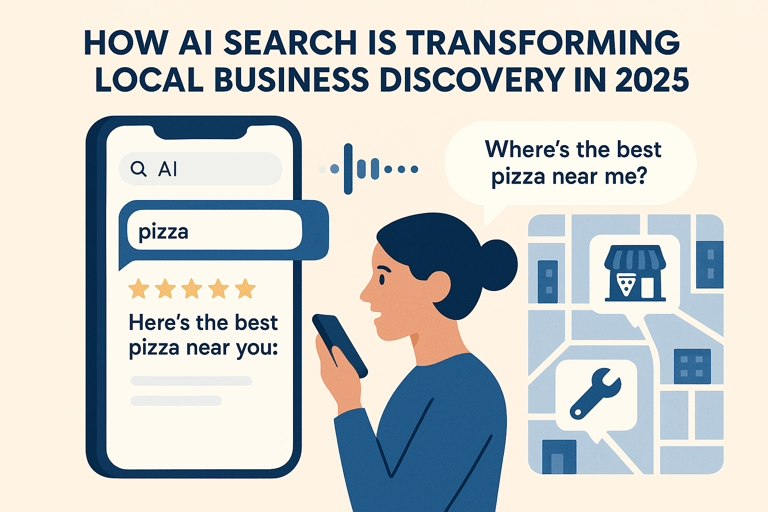
Voice search has accelerated this shift. People don’t ask Alexa, “best Italian restaurant in Chicago”, they say, “What’s the best Italian restaurant near me?” Your content should mirror these natural, conversational patterns.
Structure your content around actual questions your audience asks. Use question-based headings like “How Does This Work?” or “What Are the Benefits?” instead of vague labels like “Overview” or “Features.”
The 4-Step AEO Content Framework
Follow this proven structure to make your content AI-friendly:
- Start with a direct answer in the first 1-2 sentences of each section (just like this guide does)
- Expand with supporting details using clear, jargon-free language that explains the “why” behind your answer
- Add specific examples or data points that AI can extract as concrete facts
- Close with actionable takeaways that provide practical value to readers
Making Content Scannable for AI
AI models digest structured content more effectively than dense paragraphs. Create FAQ sections that directly address common questions, these are goldmines for answer engines.
Use formatting that enhances scannability:
- Bullet points for lists of features, benefits, or tips
- Numbered lists for sequential steps or ranked items
- Bold text to highlight key terms and concepts
- Short paragraphs (2-4 sentences maximum) that break information into digestible chunks
These elements help both AI and human readers quickly locate relevant information. When ChatGPT encounters well-structured content with clear headings, lists, and direct answers, it can confidently extract and cite your information as a reliable source.
The goal isn’t to stuff keywords throughout your text; it’s to provide comprehensive, conversational answers that address user intent. When you write like you’re explaining something to a colleague rather than optimizing for a robot, you naturally create content that answer engines prefer.
For a deeper dive into content structuring strategies, explore this comprehensive Answer Engine Optimization guide from Aleh Digital, which provides additional frameworks for creating AI-optimized content.
The Technical Foundation: Structuring Your Site with Schema Markup
Structured data, also known as schema markup, is essentially a labeling system that helps search engines and AI answer engines understand exactly what your content means. Think of it as adding sticky notes to your website that explain “this is a business address,” “this is a recipe,” or “this is a frequently asked question” in a language that AI systems like ChatGPT can read and interpret with precision.
When answer engines crawl your site, they don’t see it the way humans do. They need explicit signals to understand context. Schema markup provides those signals, transforming your content from unstructured text into organized, meaningful data that AI can confidently reference and cite.
This aspect of technical SEO has become crucial for answer engine optimization because it directly influences whether AI systems can extract and present your information accurately. Without schema markup, even your best content might be overlooked simply because AI couldn’t parse what it meant.
Schema.org provides the vocabulary and framework for this structured data, offering hundreds of schema types that define everything from local businesses to recipes to educational courses. Major search engines and AI platforms, including Google, Microsoft Bing, and others, recognize and utilize Schema.org standards to better understand web content.
Essential Schema Types for Your Business
You don’t need to implement every schema type. Focus on these four high-impact options that deliver the most value for small businesses:
- LocalBusiness schema: Defines your business name, address, phone number, hours, and service area, critical for appearing in location-based AI responses
- FAQPage schema: Marks up your FAQ sections so answer engines can pull direct question-and-answer pairs
- Article schema: Identifies blog posts and articles with metadata like publish date, author, and headline
- HowTo schema: Structures step-by-step instructions in a format that AI can easily extract and display
Implementing website schema markup correctly ensures that Large Language Models can parse your content with maximum accuracy, dramatically increasing your chances of being cited in AI-generated answers.
Implementing Schema Without Coding
The good news? You don’t need to be a developer to add schema markup to your site. WordPress users have access to several user-friendly plugins that automate the entire process.
Rank Math and Yoast SEO both include built-in schema generators that let you add structured data through simple forms and checkboxes. For more advanced control without touching code, Schema Pro offers an intuitive interface specifically designed for schema implementation.
If you’re not on WordPress, Google’s Structured Data Markup Helper walks you through the process visually, letting you highlight elements on your page and generate the appropriate code to paste into your site.
The investment in schema markup pays dividends when ChatGPT, Google Gemini, Perplexity AI, and other answer engines need to decide which sources to cite. Sites with clear, accurate, structured data consistently win over those without it.
Your 5-Step AEO Action Plan to Dominate AI Search
Ready to optimize for answer engines? This action plan distills everything into five practical steps you can start today, no technical degree required.
Step 1: Identify Your Customer’s Core Questions. Start by listing the 10-15 questions your customers ask most frequently before they buy. Check your email inbox, review customer service transcripts, and browse industry forums. Use tools like AnswerThePublic to discover what people are actually asking about your products or services. Perform competitive analysis by searching these questions in ChatGPT, Google Gemini, Perplexity AI, and Microsoft Bing’s AI chat to see which competitors are currently being cited.
Step 2: Audit and Restructure Your Top 5 Pages. Take your five most important pages, typically your homepage, main service pages, and top-performing blog posts, and evaluate them through an AEO lens. Does each page directly answer a specific question in the first paragraph? Is your content structured with clear H2 and H3 headings that break information into digestible sections? Rewrite these pages to frontload answers and eliminate fluff. Learn more about how to optimize for AI search with our complete WordPress guide.
Step 3: Implement Essential Schema Markup. Add structured data to those same five pages using the Schema.org vocabulary and the tools mentioned earlier. Prioritize LocalBusiness schema if you serve a geographic area, FAQPage schema for any page with Q&A content, and Article schema for blog posts. This step alone can dramatically improve how answer engines interpret and cite your content.
Step 4: Bolster Your E-E-A-T Signals. Create or update your author bio pages with credentials, experience, and professional photos. Add customer testimonials and review widgets to key service pages. Link to any media mentions, certifications, or professional associations. These trust signals tell AI systems that your content comes from credible sources worth citing. Tools like Ahrefs can help you analyze your current authority profile and identify gaps.
Step 5: Track Your Visibility in ChatGPT and AI Overviews. Manually test your target questions in ChatGPT, Google Gemini, Perplexity AI, and Microsoft Bing weekly. Document which sources get cited and how often your site appears. Tools like Profound and GlimpseGuide can help automate this tracking as the AEO measurement landscape matures.
**
Pro Tip: ** Don’t try to optimize your entire site at once. Master these five steps on a handful of pages first, measure the results, then expand to additional content. Small businesses that focus deeply on their core pages consistently outperform those who spread efforts too thin.
Your Next Steps in the Answer Engine Revolution
The shift from traditional SEO to Answer Engine Optimization isn’t coming; it’s already here. ChatGPT, Google Gemini, Perplexity AI, and other Generative AI tools powered by Large Language Models (LLMs) are fundamentally changing how people discover information, and the sites that are winning citations today are those that prioritize direct answers, clear structure, and demonstrable expertise over keyword density.
Start with your five most important pages. Restructure them to answer questions directly, implement basic Schema.org markup, and strengthen your credibility signals through E-E-A-T best practices. Track your visibility in AI responses weekly and refine your approach based on what’s actually getting cited.
The businesses that adapt now will dominate answer engine results for years to come. Those who wait will find themselves invisible in the AI-powered search landscape.
Ready to transform your content for the answer engine era? AgenticPress specializes in helping businesses implement winning AEO strategies that get cited by ChatGPT, Google Gemini, and other leading AI platforms. Our team combines technical expertise with content strategy to ensure your business becomes the authoritative source in your industry. Visit AgenticPress today to schedule your AEO audit and discover exactly what’s preventing your content from being cited by AI answer engines.
Don’t let your competition become the default source while you wait. The answer engine revolution is here, and your visibility depends on acting now.
Frequently Asked Questions
Tokens used: approximately 7,800